
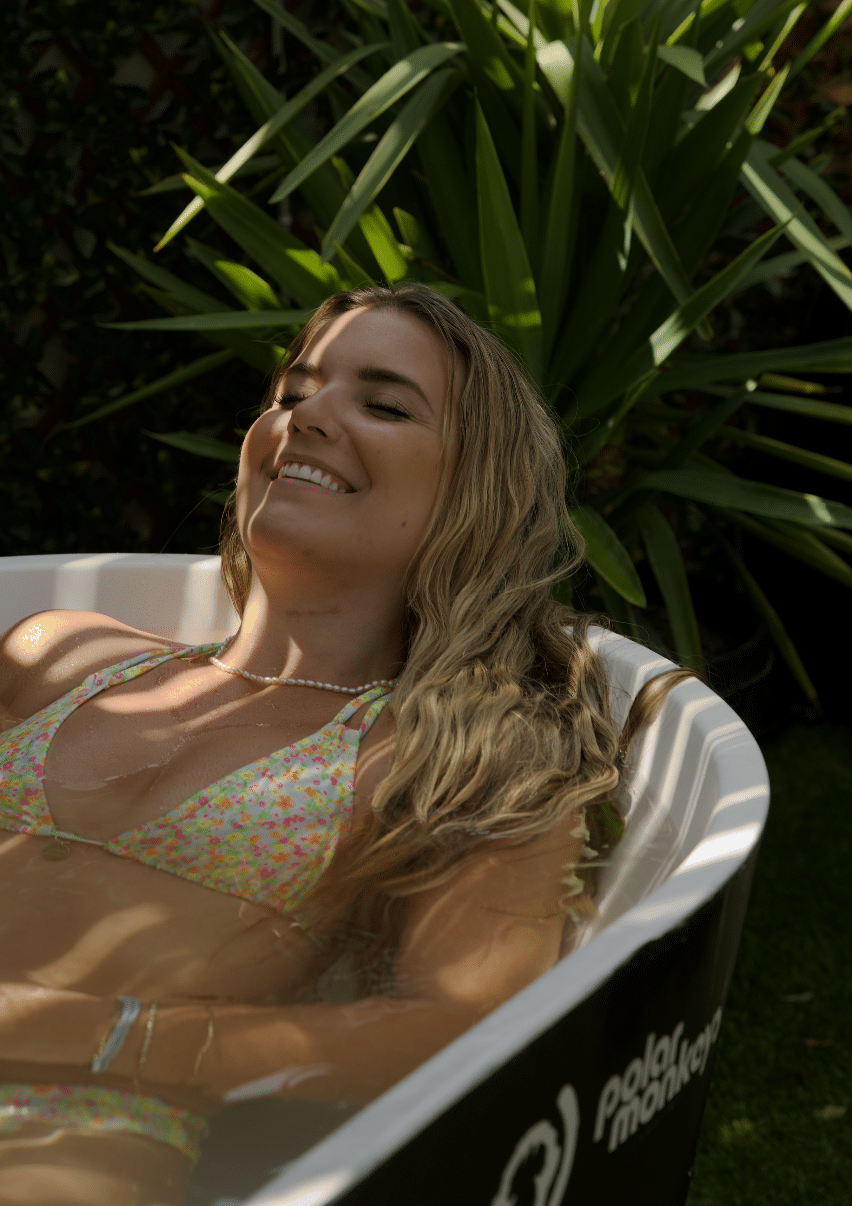

A cold plunge sets off a fast, intense stress response in your nervous system, then hands control back to the calming side once you climb out and warm up.
That swing from alarm to calm is the whole story behind most of the purported health benefits you hear about.
This guide is for beginners, gym regulars, and anyone thinking about adding cold water therapy to a wellness routine.
It covers what happens inside the body, what the research actually supports, and how to plunge without taking needless risks.
A few terms show up again and again, so here they are up front:
- Sympathetic nervous system: the “fight or flight” branch that speeds up heart rate and breathing.
- Parasympathetic nervous system: the “rest and digest” branch that slows the body back down.
- Vagus nerve: the main nerve of the parasympathetic side, running from the brainstem to the heart, lungs, and gut.
- Cold shock: the gasp, fast breathing, and heart rate spike in the first minute of icy water.
- Vagus nerve response: the slowdown in heart rate and breathing that follows as the body adapts and rewarms.
If you want to feel this response for yourself, a cold plunge in a commercial-grade tub, with a shower and warm space steps away, is the easiest place to start.
Quick Safety Checklist Before You Get In
- Get clearance from your doctor if you have heart disease, high blood pressure, diabetes, Raynaud’s, or are pregnant.
- Never plunge alone during your first sessions.
- Enter slowly, feet first, and keep your head above the water.
- Set a timer before you step in.
- Have a towel, warm clothes, and a warm place ready.
- Get out right away if you feel chest pain, dizziness, confusion, or numbness.
Overview of Cold Water Immersion and Cold Plunges
Cold water immersion means sitting in water cold enough, usually below 60°F, to drop skin temperature fast and trigger a whole-body stress response.
A plunge tub is the most popular way to do it today: a tub of chilled water deep enough to cover the body up to the shoulders.
How a Plunge Differs From a Cold Shower
A cold shower hits only part of your skin at a time, and tap water in many US homes stays well above 50°F.
A plunge tub surrounds the whole body at once and holds a steady water temperature.
Water also pulls heat from the body far faster than air does, so the nervous system reacts much harder to a plunge than to a shower.
Common Temperatures and Durations
| Setting | Typical water temperature | Typical time in the water |
|---|---|---|
| Beginner home setup | 55 to 60°F | 1 to 3 minutes |
| Standard cold plunge tub | 50 to 55°F | 2 to 5 minutes |
| Commercial tub or ice bath | 37 to 45°F | 30 seconds to 3 minutes |
| Sports medicine recovery protocols | 50 to 59°F | 10 to 15 minutes |
Most beginners do best starting between 50 and 60°F and staying in for 1 to 2 minutes.
Your Nervous System in the Cold, Minute by Minute
The fastest way to understand cold therapy is to follow one session from the first step to the rewarm.
- 0 to 30 seconds, cold shock: Cold receptors in the skin fire all at once, the sympathetic system takes over, and you gasp, breathe fast, and feel your heart rate jump.
- 30 seconds to 2 minutes, peak stress: Blood vessels in the skin and limbs clamp down, blood pressure climbs, and norepinephrine pours into the bloodstream.
- 2 to 3 minutes, settling: Breathing slows as the body adapts, and the feeling of panic starts to fade.
- After you get out, the rebound: The parasympathetic side, led by the vagus nerve, pulls heart rate down while blood flow returns to the skin as you rewarm.
The cold shock phase is the risky part.
Decades of research on accidental cold water immersion, much of it led by UK physiologist Michael Tipton, show the gasp reflex and uncontrolled breathing are strongest in the first minute.
That is why you should never dunk your head during a frigid dip.
The rebound phase is where the calm comes from.
A 2010 study in the European Journal of Applied Physiology by Al Haddad and colleagues found that cold water on the face after exercise sped up parasympathetic reactivation, measured through heart rate variability.
In plain terms, the cold nudged the vagus nerve to slow the heart sooner.
Cold Plunge Benefits and What the Evidence Supports
Cold plunge benefits fall into a handful of groups, and the proof behind each one varies a lot.
| Potential benefit | How it likely works | Evidence strength |
|---|---|---|
| Less muscle soreness | Cold narrows blood vessels and slows swelling in worked muscles | Moderate |
| Better mood and alertness | Norepinephrine and dopamine rise during cold exposure | Moderate short term, limited long term |
| Stress resilience | Repeated, controlled stress trains a calmer reaction | Early and limited |
| Better sleep | Parasympathetic rebound after the session | Limited and mixed |
| Immune system support | Short bursts of stress hormones and white blood cell activity | Limited and mixed |
| Improved cardiovascular health | Repeated tightening and widening of blood vessels | Weak, mostly theoretical |
| Metabolism boost | Cold activates brown fat, which burns energy to make heat | Early, small studies |
The main mechanism is simple.
Cold water makes blood vessels constrict, which cuts blood flow and slows metabolic activity in the tissue.
When you get out, the tissue warms, the vessels widen again, and fresh blood moves back through the area.
Mood, Stress, and the Mental Side of Cold Plunging
Cold exposure reliably changes mood in the short term, and the brain chemistry behind that change is fairly well studied.
In a 2000 study in the European Journal of Applied Physiology, Šrámek and colleagues had 10 men sit in 57°F water up to the neck for one hour.
Their plasma norepinephrine rose about 530% and dopamine about 250%.
Keep two caveats in mind: the hour-long session was far longer than any normal plunge, and dopamine in the blood does not equal dopamine in the brain.
A 2023 study in the journal Biology tested something closer to real life.
Researchers put 33 adults who were new to cold water in a 68°F bath for 5 minutes, then scanned their brains.
Participants felt more active, alert, attentive, and inspired, and less distressed and nervous, and those changes lined up with stronger links between brain networks tied to attention and emotion control.
Norepinephrine and Endorphins in Plain Terms
Norepinephrine is a stress hormone and brain messenger that sharpens focus and raises alertness.
Endorphins are the body’s natural painkillers, and they likely add to the “post-plunge high” many people describe, though they are harder to measure.
Practicing calm breathing while those chemicals surge teaches the nervous system that stress can be handled, which is the core idea behind using cold for stress resilience.
For a deeper look at this side of the practice, see how cold plunge therapy may help reduce stress and support mental health.
How to Measure Your Own Mood Changes
- Rate your mood from 1 to 10 right before the plunge and 30 minutes after.
- Rate your stress level the same way at the end of the day.
- Log sleep quality the next morning.
- Review four weeks of notes before deciding whether plunging helps you.
Recovery, Inflammation, and Cold Plunge Therapy for Athletes
Cold water immersion can reduce muscle soreness after hard exercise, but timing matters for anyone chasing strength or size.
A 2016 meta-analysis in Sports Medicine by Machado and colleagues found that cold water immersion eased muscle soreness better than passive recovery.
The sweet spot in that review was water around 52 to 59°F for roughly 10 to 15 minutes.
Cold dampens local swelling and the inflammatory response after exercise-induced muscle damage, which is why sore muscles often feel better sooner.
Why Timing Changes Strength Gains
Less inflammation is not always a win.
In a 2015 study in the Journal of Physiology, Roberts and colleagues had 21 men lift twice a week for 12 weeks, followed by either 10 minutes of cold water immersion or an active cool-down.
The cold group gained less muscle mass and strength, and a follow-up test showed weaker muscle-building signals in the hours after training.
When Athletes Should Skip the Post-Workout Plunge
- After strength or hypertrophy sessions when building muscle is the main goal.
- During off-season blocks focused on long-term adaptation.
- When a coach or sports medicine clinician has not cleared cold work alongside an injury.
Plunging makes more sense between back-to-back games, during tournaments, or on rest days, when the goal is to feel ready for the next physically challenging activity.
You can dig into the timing question in this breakdown of plunging before vs. after a workout.
Immune Effects and Longevity Claims of Cold Therapy
The evidence that cold therapy strengthens the immune system is mixed, so treat any big promise with care.
The largest trial, published in PLOS ONE in 2016, randomized 3,018 adults to end their hot showers with 30, 60, or 90 seconds of cold water for 30 days.
The cold shower trial found a 29% drop in sick-day absences from work, but no drop in the number of days people actually felt ill.
That suggests people may have felt well enough to work, not that they got sick less often.
A small 2014 trial in PNAS found that men trained in breathing techniques, meditation, and cold exposure had fewer flu-like symptoms and a calmer inflammatory response after an injected bacterial toxin.
Because the training mixed several methods, the result cannot be pinned on cold alone.
For longevity, the honest answer is simple: no human study shows that cold plunges extend lifespan.
Use careful language like “may support,” “early research suggests,” and “linked with,” and skip words like “proven” or “anti-aging.”
Circulation, Heart Rate Variability, and Blood Pressure
Cold exposure causes a sharp, short rise in blood pressure and heart rate as blood vessels in the skin tighten and push blood toward the core.
This is the same reaction doctors use in the “cold pressor test,” where a hand goes into ice water to check how blood pressure responds.
For healthy people, the spike fades once they get out and rewarm.
For people with high blood pressure or heart disease, that spike adds real strain.
A 2012 paper in the Journal of Physiology by Shattock and Tipton described “autonomic conflict,” where the cold shock response and the diving reflex fire at the same time and can trigger an irregular heartbeat.
That risk is higher when the face goes under, another reason to keep your head dry.
If you have hypertension, check your blood pressure before and after a few sessions, start with warmer water and shorter times, and talk to your clinician first.
Anyone with known heart rhythm problems, a past heart attack, or chest pain with exertion needs medical clearance before any cold immersion.
On the plus side, many people track heart rate variability with a wearable and see higher readings the morning after a session, a sign the parasympathetic side is active.
How to Cold Plunge Safely: Protocols for Cold Plunge Therapy
A safe first session is short, supervised, and planned before you ever touch the water.
Who Should Talk to a Doctor First
- Heart disease, arrhythmia, or a past heart attack
- High blood pressure, especially if it is poorly controlled
- Pregnancy
- Diabetes or nerve damage in the hands and feet
- Raynaud’s syndrome or cold urticaria (hives from cold)
- A history of fainting or seizures
Quick-Start Protocol for First-Timers
Beginner plunge in 7 steps
- Set the water temperature between 50 and 60°F.
- Bring a friend and set a 1-minute timer.
- Take three slow breaths standing beside the tub.
- Step in feet first and lower yourself to chest or shoulder depth over 10 to 20 seconds.
- Breathe slowly until the timer ends, then get out.
- Dry off, put on warm clothes, and move around gently to rewarm.
- Write down the water temperature, your time, and how you feel.
Breathwork Cues That Help
- Breathe out slowly before you sit down, instead of holding your breath.
- Breathe in for 4 counts and out for 6 counts, keeping the exhale longer.
- Relax your jaw and drop your shoulders.
- Hum on the exhale if your breathing speeds up.
Controlled breathing before and during the plunge helps manage the body’s shock response, and it is the single best tool for staying calm.
Contrast Therapy: Alternating Sauna and Cold Plunge
Contrast therapy means moving back and forth between heat and cold, most often a hot sauna and icy water.
The heat widens blood vessels and the cold tightens them, which gives the circulatory and nervous systems a strong workout.
A Safe Sauna-to-Plunge Sequence
- Sauna for 10 to 15 minutes.
- Rinse off in a lukewarm shower for about 30 seconds.
- Sit in the cold tub for 1 to 3 minutes.
- Rest seated for 5 to 10 minutes and sip water.
- Repeat for 2 to 3 rounds total.
Blood pressure shifts quickly when you jump from hot to cold, and some people feel lightheaded when they stand up after the plunge.
Rise slowly, hold a rail, stay hydrated, and skip alcohol before or during sessions.
Allow at least 30 to 60 minutes of recovery time before driving or hard training if you feel drained.
If you want a full routine to follow, here is a guide to building a sauna and cold plunge contrast routine.
Choosing a Cold Plunge Tub: Buying Guide and Setup
The right cold plunge tub depends on your space, budget, and how cold you want the water.
| Tub type | Best for | Trade-offs |
|---|---|---|
| Barrel (wood or composite) | Outdoor setups with a spa look | Heavy, needs a solid level base, wood needs upkeep |
| Acrylic or insulated tub | Year-round home use with a chiller | Higher cost, needs dedicated space and power |
| Portable or inflatable tub | Renters, small spaces, trying it out | Weaker insulation, often needs ice or an add-on chiller |
Must-Have Features
- Chiller: holds a steady water temperature without buying bags of ice.
- Advanced filtration: a filter plus ozone or UV sanitizing keeps the water clean longer.
- Insulation and a fitted cover: cut power use and keep debris out.
- Easy drain valve: makes water changes quick.
Quality craftsmanship matters more than a sleek design, so check seams, cover fit, and warranty length before you buy.
Sizing for Full-Body Submersion
Pick a plunge tub deep enough for water to reach your collarbones while you sit.
Taller users should check interior length so they can sit with knees only slightly bent.
Power and Plumbing
- Plug the chiller into a GFCI-protected outlet, and check whether the maker calls for a dedicated circuit.
- Place the tub on a level, weight-rated surface close to a drain or yard runoff.
- Keep outdoor tubs in shade to reduce chiller workload.
Most portable plunge setups take about 20 minutes to assemble and fill.
Maintenance and Cleaning for Cold Plunge Tubs
A clean tub is safer and far more pleasant to use.
With good filtration and a sanitizer, drain and refill every one to three weeks, and more often if several people use it daily.
Without a filter, change the water every few days.
Simple Filter Care
- Turn off the chiller and pump.
- Remove the filter cartridge and rinse it with a hose.
- Let it dry fully before reinstalling if you have a spare.
- Replace the cartridge on the schedule in the owner’s manual.
Water Chemistry Checks
- Test the water two to three times a week with pool or spa test strips.
- Keep pH around 7.2 to 7.8.
- Keep sanitizer levels in the range the tub maker recommends.
- Shower before every plunge to cut down on oils, sweat, and lotion in the water.
Risks, Blood Pressure, and Who Should Avoid Cold Exposure
Most healthy adults tolerate short plunges well, but cold water has real potential risks.
Acute Risks to Know
- Cold shock and drowning: the gasp reflex can pull water into the lungs if your head goes under.
- Arrhythmia: an irregular heartbeat, more likely with heart disease or when the face is submerged.
- Hypothermia: core body temperature drops too far with extended exposure.
- Afterdrop: body temperature keeps falling for a few minutes after you get out.
- Tissue damage: long sessions in very cold water can injure skin and nerves in the hands and feet.
People with diabetes may not feel tissue damage building, because nerve damage can dull the sense of cold and pain.
Pregnant people and anyone with the conditions listed earlier should avoid cold plunges until a healthcare provider clears them.
Warning Signs to Get Out Now
- Chest pain or a pounding, uneven heartbeat
- Dizziness or confusion
- Shivering you cannot control
- Numb, white, or waxy skin
- Slurred speech
For the first several sessions, never plunge alone.
A partner can help you out of the water and spot trouble you might miss.
For more on common errors, read about the cold plunging mistakes beginners make most often.
Building a Cold Plunging Routine: Frequency, Duration, and Tracking
A good routine starts slow and grows as the body adapts.
Beginner Frequency Plan
| Weeks | Sessions per week | Time per session |
|---|---|---|
| 1 to 2 | 2 | 1 minute |
| 3 to 4 | 3 | 1 to 2 minutes |
| 5 and beyond | 2 to 4 | 2 to 5 minutes, based on water temperature |
Duration by Water Temperature
| Water temperature | Suggested time |
|---|---|
| 55 to 60°F | 2 to 5 minutes |
| 50 to 55°F | 1 to 3 minutes |
| 45 to 50°F | 1 to 2 minutes |
| 37 to 45°F | 30 seconds to 2 minutes |
These ranges are general starting points, not strict rules, so listen to your body and get out if something feels wrong.
Simple Metrics to Track
- Water temperature and time in the water
- Mood before and after, on a 1 to 10 scale
- Sleep quality that night
- Morning resting heart rate or heart rate variability
- Muscle soreness on a 1 to 10 scale
- How long it takes to feel warm again
A notes app or plunge app works fine, as long as you log every session.
Frequently Asked Questions
Is a cold plunge safe if you have high blood pressure?
A cold plunge is not automatically unsafe with high blood pressure, but it needs a doctor’s approval first.
Cold water causes a sharp, short rise in blood pressure and heart rate as blood vessels tighten.
For someone with poorly controlled hypertension or heart disease, that spike adds strain on the heart.
If your doctor clears you, start with warmer water around 55 to 60°F, stay in for one minute, and check your blood pressure before and after early sessions.
How long should you stay in a cold plunge?
How long you should stay in a cold plunge depends mostly on water temperature and your experience.
Beginners usually do well with 1 to 2 minutes in 50 to 60°F water.
Colder water between 37 and 45°F calls for shorter sessions, often 30 seconds to 2 minutes.
Sports medicine studies on muscle soreness used longer sessions of 10 to 15 minutes in milder cold water, but those are not a good starting point for new plungers.
Does a cold plunge reset your nervous system?
A cold plunge does not “reset” your nervous system, but it does push it through a clear stress-and-recovery cycle.
The first minute triggers the sympathetic fight-or-flight response.
After you get out, the parasympathetic side, led by the vagus nerve, slows heart rate and breathing again.
Repeating that cycle under control may help some people handle stress better over time, though long-term studies are still limited.
Does cold plunging help you lose weight?
Cold plunging can raise calorie burn a little, but it is not a reliable weight loss method.
Cold exposure activates brown fat, which burns energy to make heat, and early studies show a metabolic bump during and after sessions.
The extra calories from a few short plunges a week are small, though.
Diet, movement, and sleep matter far more for weight, so treat any fat-loss effect from cold water as a bonus rather than a goal.
Is it better to cold plunge before or after a workout?
Whether to cold plunge before or after a workout depends on your training goal.
If you want to build muscle and strength, research suggests skipping the plunge right after lifting, because cold can blunt muscle-building signals.
If your goal is to feel less sore between games or hard sessions, a plunge after exercise can help.
Many people plunge in the morning or on rest days to get the mood lift without affecting strength gains.
What are realistic results from a cold plunge routine?
Realistic results from a cold plunge routine include a short-term lift in mood and alertness, less muscle soreness after hard exercise, and, for some people, better sleep.
Most people feel the mood effect right away, while other changes take a few weeks of steady practice.
Claims about curing disease, reversing aging, or major weight loss are not backed by solid evidence, so track your own results and judge by what you notice.