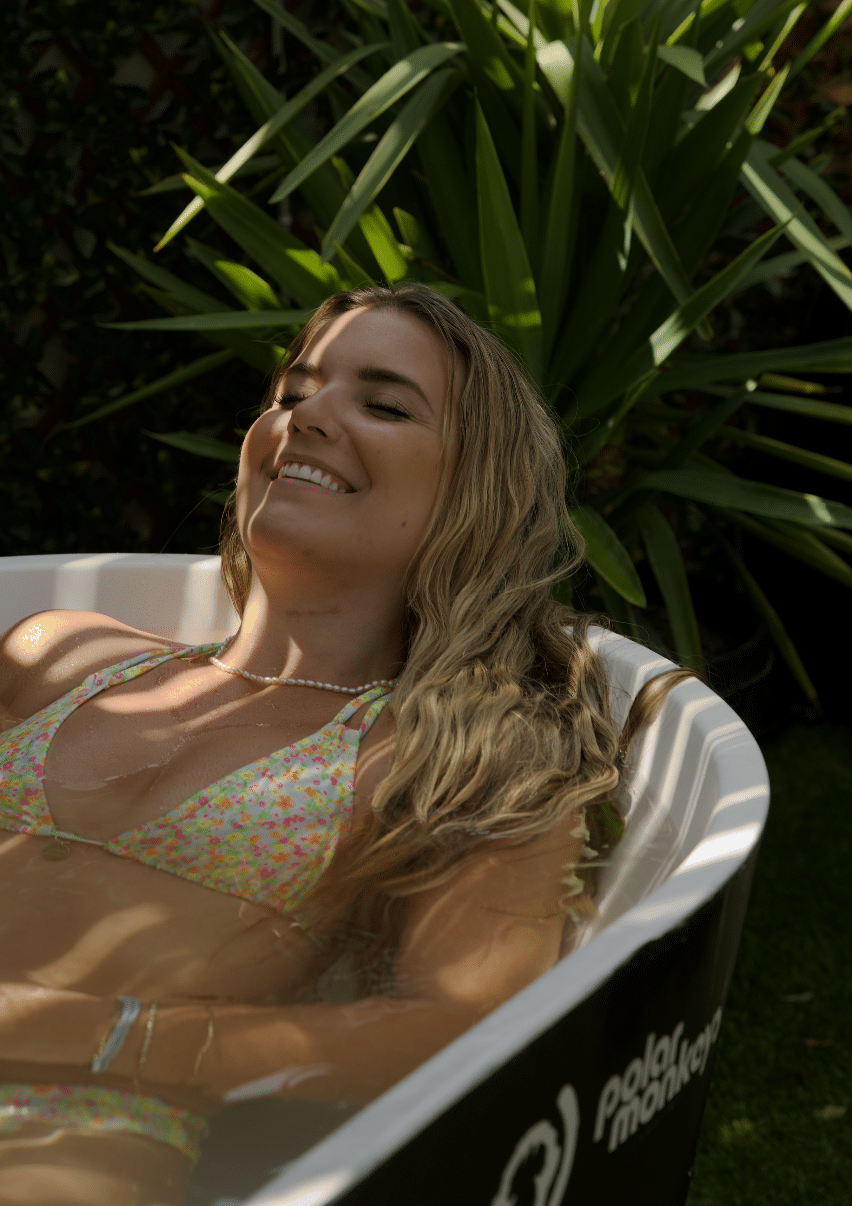

What does an ice bath do the moment you step in?
Within seconds, cold water triggers a gasp, a racing heart, and a rush of stress hormones, while blood vessels in your skin clamp down to protect your core.
Over the next three minutes, that alarm settles, breathing slows, and the hormone release that people chase starts to build.
This guide walks through each stage of that reaction, then covers the real ice bath benefits, the risks, and how to start safely in 2026.
You will also see where the research is strong, where it is thin, and where popular claims go further than the science.
Quick Overview: What Does an Ice Bath Do?
An ice bath is a short session of cold water immersion, usually up to the chest or neck, in water cooled well below body temperature.
A cold plunge is the same idea, usually in a purpose-built tub that holds a steady water temperature without bags of ice.
Most sessions use water between 39°F and 59°F and last anywhere from 30 seconds to 15 minutes, depending on experience and goal.
The main benefits people look for are less muscle soreness, a lift in mood and focus, and better stress control.
The main risks are the cold shock response, strain on the heart, and hypothermia from prolonged exposure.
If you want to feel what does an ice bath do firsthand, a sauna and cold plunge studio lets you try it without buying any equipment.
Your First 3 Minutes, Second by Second
The table below shows what a healthy adult typically feels in a very cold bath, based on the cold shock research of Dr. Mike Tipton and colleagues at the University of Portsmouth.
| Time in the water | What your body does | What you feel |
|---|---|---|
| 0 to 15 seconds | Cold receptors in the skin fire, and a reflex gasp pulls in air | A sharp intake of breath, tight chest |
| 15 to 30 seconds | Breathing speeds up, heart rate jumps, blood vessels in the skin narrow | Panic urge, fast shallow breaths |
| 30 to 90 seconds | The cold shock response peaks and starts to fade; norepinephrine climbs | Sting on the skin, racing thoughts |
| 90 to 180 seconds | Breathing comes back under control, skin starts to go numb | Calmer, alert, a “switched on” feeling |
The cold shock response usually lasts one to three minutes, which is why the first three minutes matter most for safety.
A 2024 meta-analysis in the Journal of Thermal Biology found the response weakens after about four immersions, with heart rate rising about 14 beats per minute less than on day one.
What Is a Cold Plunge Versus a Cold Shower
A cold plunge covers most of the body in still, cold water, while a cold shower only hits the skin the spray touches.
Water conducts heat about 25 times better than air, so full immersion produces a much stronger effect than a shower.
Cold showers make sense for beginners, travel days, and people who want a daily habit with almost no setup.
A cold plunge makes sense for post-workout recovery, deeper cold exposure, and anyone who wants precise, repeatable sessions.
A home cold plunge setup typically needs:
- A tub or stock tank deep enough to cover the shoulders when seated
- A chiller or a steady supply of ice
- A floating thermometer to check water temperature
- A filter or sanitizer to keep the water clean
- A towel, warm clothes, and a nonslip mat for getting out
How Cold Exposure Works (Cold Shock Response, Blood Flow, Hormone Release)
Cold exposure acts on three systems at once: your nervous system, your blood vessels, and your hormones.
Each one explains a different part of what you feel in the water.
Cold Shock Response
The cold shock response is an automatic reaction of the sympathetic nervous system, the “fight or flight” side of your body’s wiring.
Sudden cold on the skin sets off a reflex gasp, followed by fast, deep breathing you cannot fully control at first.
Heart rate and blood pressure rise sharply in the same window.
Research from the University of Portsmouth describes this pattern as a gasp, then uncontrolled hyperventilation, then a fast heart rate, all inside the first minute.
This is the reason you should never dunk your head on a first plunge or hold your breath underwater.
Vasoconstriction and Blood Flow
Vasoconstriction is the narrowing of blood vessels near the skin, and cold water triggers it within seconds.
This narrowing reduces blood flow to the arms, legs, and skin, which keeps warm blood around the heart, lungs, and brain to protect core temperature.
That shift is also why the skin turns pink or pale and why fingers feel clumsy.
After you get out, the vessels relax again, a process called vasodilation, and warm blood rushes back to the skin and muscles.
This rebound is the part people describe as a warm, tingling glow a few minutes after the session.
One detail many guides skip: core temperature can keep falling for several minutes after you exit, an effect called “afterdrop,” so rewarming matters.
Hormone Release
Norepinephrine is the main hormone cold exposure raises, and it drives alertness, focus, and blood vessel tone.
In a 2000 study in the European Journal of Applied Physiology, Šrámek and colleagues found that a one-hour head-out immersion in 57°F water raised plasma norepinephrine by 530% and dopamine by 250%.
The same study found adrenaline levels stayed flat, so the “adrenaline rush” people describe is mostly a norepinephrine response.
Keep the context in mind: that was a full hour in the water, far longer than a typical 2 to 5 minute plunge, so shorter sessions likely produce a smaller rise.
Brown Fat Activation
Brown fat is a type of body fat that burns energy to generate heat instead of storing it.
This process, called thermogenesis, runs through a protein in brown fat cells that turns fuel directly into warmth.
Cold exposure switches brown fat on because the norepinephrine released in the cold signals those cells to start producing heat.
A 2021 study in Cell Reports Medicine by Søberg and colleagues found that experienced winter swimmers had a larger heat-producing response to cold than non-swimmers, though their brown fat glucose uptake rose about the same.
Core Ice Bath Benefits
The best-supported ice bath benefits are short-term relief of sore muscles and a lift in alertness, while other claims rest on smaller studies.
Each benefit below is paired with what the research actually shows.
Recovery and Reduced Inflammation
Cold therapy can reduce inflammation and swelling in tired muscles by slowing blood flow and cooling the tissue.
The cooling effect also numbs nerve endings, which gives a short-term painkilling effect.
A 2012 Cochrane review of 17 studies and 366 people found that cold water immersion reduced muscle soreness one to four days after exercise compared with rest.
A 2016 meta-analysis in Sports Medicine by Machado and colleagues found the best soreness results with water at 52°F to 59°F for about 10 to 15 minutes.
Timing matters for athletes in sports medicine programs.
A 2015 study in the Journal of Physiology by Roberts and colleagues found that regular 10-minute cold baths after strength training reduced long-term gains in muscle size and strength.
The practical takeaway is simple: use ice baths to enhance recovery after games, races, double sessions, or hard conditioning work, and keep them away from workouts aimed at building muscle.
A common myth is that ice baths flush out lactic acid, but lactate clears from the blood within about an hour on its own, with or without cold water.
Circulation and Blood Flow Benefits
Improved circulation after rewarming comes from the cycle of narrowing and widening blood vessels.
Repeated time in cold temperatures may train blood vessels to respond faster, which is one reason regular plungers report warmer hands and feet over time.
You can track your own blood circulation changes with simple tools:
- Check resting heart rate each morning with a watch or chest strap.
- Track heart rate variability (HRV) over several weeks.
- Time how long it takes your skin to feel warm again after a session.
- Take a home blood pressure reading before and an hour after plunging.
Metabolic Effects and Brown Fat Benefits
Cold exposure burns calories because the body must generate heat through shivering and brown fat activity.
The extra burn from a 3-minute plunge is small, so treat calorie loss as a side benefit, not a weight-loss plan.
Research suggests cold may also help blood sugar control.
A 2015 study in Nature Medicine by Hanssen and colleagues found that 10 days of mild cold air exposure raised insulin sensitivity in men with type 2 diabetes, though that study used cold air, not cold water.
Emotional Benefits and Mental Resilience
The mental and emotional benefits of cold water are the reason many people keep plunging long after their muscles recover.
Commonly reported emotional benefits include:
- A brighter mood that lasts for a few hours
- Sharper mental clarity and focus
- Lower feelings of stress later in the day
- A sense of accomplishment early in the morning
A 2025 systematic review in PLOS One by Cain and colleagues found that stress levels dropped 12 hours after cold water immersion, though not immediately or at 24 hours.
Mental toughness grows from practice: each session teaches you to stay calm and slow your breathing while your body sends alarm signals.
That skill of staying steady under stress carries over to work, sports, and hard conversations.
Comparing Ice Bath Benefits to Alternatives
Cold showers, contrast therapy, and portable tubs each give part of the ice bath effect, with different trade-offs.
Cold Plunge vs. Cold Showers
A cold plunge produces a stronger and more even effect than cold showers because water surrounds the whole body.
Cold showers still count.
A 2016 trial in PLOS One by Buijze and colleagues followed more than 3,000 adults and found that a daily hot-to-cold shower ending in 30 to 90 seconds of cold cut self-reported sick days from work by 29%, though the number of days people felt ill did not change.
Ice Baths vs. Contrast Therapy
Contrast therapy alternates heat, such as a sauna or hot tub, with cold water, and many people find it easier to start with than cold alone.
The Cochrane review found no clear difference in soreness between cold water immersion and contrast immersion, so pick the method you will actually stick with.
For a step-by-step version, see this guide to building a sauna and cold plunge contrast routine.
Portable Alternatives for At-Home Use
Not everyone has room for a chilled tub, and several low-cost options still deliver exposure to cold:
- Inflatable or collapsible plunge tubs filled with ice
- A standard bathtub with 20 to 40 pounds of ice
- Cold showers in the last 1 to 2 minutes of your normal shower
- Face immersion in a bowl of ice-cold water for 15 to 30 seconds
How To Take an Ice Bath Safely
Safe ice baths start with the right water temperature, a short time limit, and a plan to get out at the first warning sign.
Temperature and Time by Experience
| Experience level | Water temperature | Time in the water |
|---|---|---|
| Beginner (first 2 weeks) | 50°F to 59°F | 30 seconds to 2 minutes |
| Intermediate | 45°F to 50°F | 2 to 5 minutes |
| Advanced | 37°F to 45°F | 3 to 6 minutes |
| Athlete recovery protocol | 52°F to 59°F | 10 to 15 minutes maximum |
Colder water calls for shorter durations, so do not combine the coldest temperatures with the longest times.
Watch for Hypothermia Signs
Hypothermia happens when core temperature drops below 95°F, according to the CDC.
Get out and warm up right away if you notice:
- Shivering you cannot stop
- Confusion or slurred speech
- Clumsy hands or trouble standing
- Extreme drowsiness
- Shivering that suddenly stops while you still feel cold
Bring a Buddy for Your First Sessions
Have another person present for your first few plunges.
The gasp reflex and fast breathing can cause dizziness, and a buddy can help you out of the tub and spot warning signs you might miss.
If you want to know what a typical first week feels like, read this breakdown of what to expect in your first 7 days of cold plunging.
Protocols, Timing, and Frequency
A good protocol covers what you do before the plunge, how often you go, and how you warm back up.
Before the Bath
Start warm, not cold.
A 5-minute walk, light mobility work, or a sauna session raises body temperature and makes the first minute easier.
Do 1 to 2 minutes of slow, deep breathing before you step in, with long, relaxed exhales.
How Often to Plunge
For recovery after hard training or competition, 2 to 3 sessions per week is a common pattern among elite athletes.
For general wellness and mood, short sessions of 1 to 3 minutes, 3 to 5 times per week, are enough for most people.
If building muscle is your top goal, schedule plunges on rest days or several hours away from lifting sessions.
After the Bath
Rewarm with your own body heat first.
Dry off, put on warm clothes, and do light movement such as air squats or a brisk walk to help your body generate heat.
A warm drink helps, and a warm shower is fine once shivering eases.
Avoid jumping straight into a very hot shower, which can make lightheadedness worse as blood vessels open quickly.
Risks, Contraindications, and When To Avoid Cold Therapy
Ice baths are not safe for everyone, and the biggest risk is strain on the heart during the cold shock response.
Skip cold water therapy, or get medical clearance first, if you have:
- High blood pressure that is not well controlled
- Heart disease, a past heart attack, or heart failure
- Irregular heart rhythms (arrhythmia)
- Raynaud’s disease or poor circulation in the hands and feet
- Cold urticaria (hives triggered by cold)
- Pregnancy
Some medications change how your body handles cold.
Beta blockers can blunt the heart rate response, while certain sedatives, antipsychotics, and alcohol can weaken your ability to sense or control body temperature.
Talk with your doctor or a sports medicine provider before starting, especially if you take daily medication or have any heart or blood pressure condition.
For a deeper look at the research on benefits and limits, the 2025 PLOS One systematic review on cold-water immersion is one of the most complete summaries available.
The same review found that the immune system showed no significant change right after a plunge, even though some small studies report short-term shifts in white blood cell count.
Practical Tips and Troubleshooting
Small habits make cold plunges easier, safer, and more consistent.
Measure Water Temperature Accurately
Use a digital floating thermometer instead of guessing by feel.
Stir the water first, then read the temperature at mid-depth, because ice and chillers can leave colder layers near the bottom.
Check every session before, since a few degrees change how the water feels a lot.
Breathe Through the Discomfort
Slow breathing is the fastest way to calm the cold shock response.
Try breathing in through your nose for 4 seconds and out through your mouth for 6 to 8 seconds.
Long exhales activate the parasympathetic nervous system, the “rest and digest” side, which helps lower heart rate.
Never practice breath-holding or hyperventilation drills while in the water.
Progress Gradually
Start with 30 to 60 seconds at the warm end of the range, around 55°F to 59°F.
Add 15 to 30 seconds per week, or drop the temperature by 1 to 2 degrees, but never change both at once.
Freezing water is not the goal, and comfort with calm breathing is a better sign of progress than the number on the thermometer.
Frequently Asked Questions
Do ice baths reduce DOMS effectively?
Ice baths reduce DOMS (delayed onset muscle soreness) a modest amount compared with resting.
A 2012 Cochrane review found that cold water immersion lowered soreness one to four days after hard exercise.
The best results in later research came from water around 52°F to 59°F for 10 to 15 minutes.
The effect is mostly on how sore you feel, not on how strong the muscle is.
Athletes who want muscle growth should avoid plunging right after strength training.
How long should you stay in an ice bath?
How long to stay in an ice bath depends on water temperature and experience.
Beginners should start with 30 seconds to 2 minutes in water between 50°F and 59°F.
Experienced users often stay 3 to 6 minutes in colder water.
Recovery protocols for athletes use up to 10 to 15 minutes in milder cold, but 15 minutes is a safe ceiling for almost everyone.
Get out sooner if you shiver hard, feel confused, or lose coordination.
Do ice baths improve sleep?
Ice baths may improve sleep for some people, but the research is still early.
A 2025 PLOS One review of cold water immersion reported better sleep quality in a small number of trials.
Many people find that an evening plunge leaves them alert at first, so a morning or afternoon session may work better for restful sleep.
Track your own sleep for two weeks to see how cold exposure affects you.
For more on timing, see this post on how cold plunging can affect sleep and energy.
What is the difference between ice baths and cryotherapy?
The difference between ice baths and cryotherapy is the medium that cools your body.
An ice bath uses cold water, usually between 37°F and 59°F, for a few minutes.
Whole-body cryotherapy uses dry, extremely cold air, often below -166°F, for about 2 to 3 minutes.
Water pulls heat away much faster than air, so an ice bath cools muscles more deeply even at a far warmer temperature.
This comparison of ice baths and cryotherapy covers the pros and cons in more detail.
Conclusion: Is Cold Exposure Right For You?
Cold exposure offers many benefits, including physical benefits like less soreness and a short-term boost in alertness, along with real risks for the heart and for anyone who stays in too long.
The first three minutes are the most intense part, and they get easier after a handful of sessions as the cold shock response fades.
Start conservatively, with shorter durations in milder water, and keep a simple log of how you sleep, feel, and recover.
If your numbers and your mood improve, cold therapy may earn a regular spot in your routine.
If they do not, a cold shower or a sauna-and-plunge contrast session may suit you better.
For further reading, the 2012 Cochrane review on cold water immersion and muscle soreness and the 2025 PLOS One review on health and wellbeing are two of the strongest sources available.